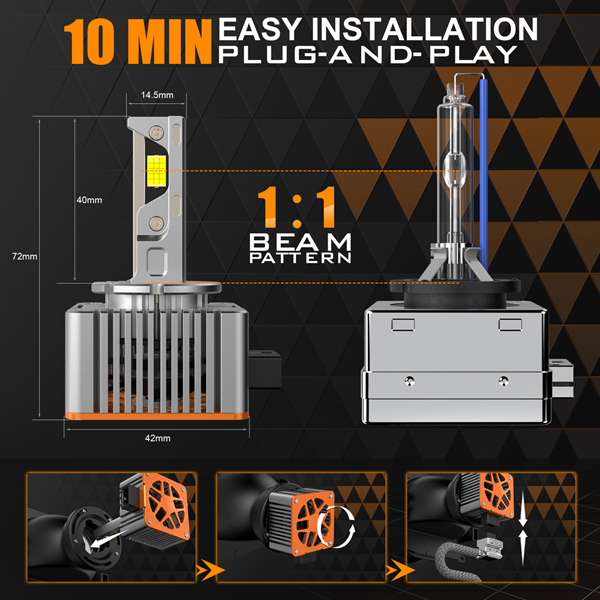
What is the difference between LED and regular light bulbs?
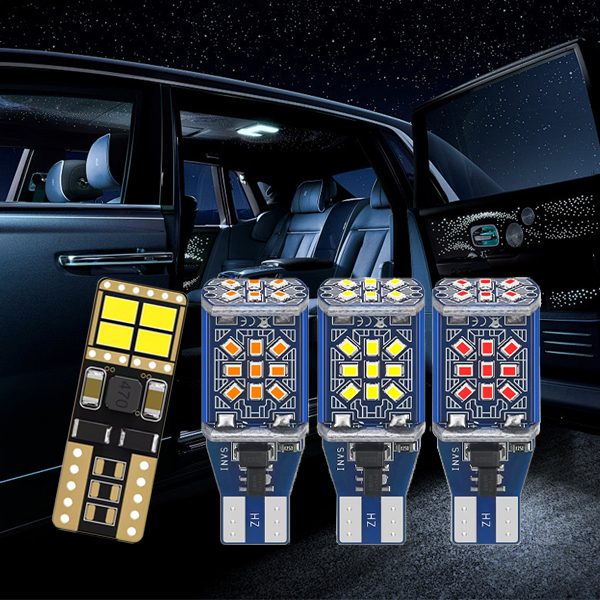
The main differences between LED light bulbs and regular light bulbs (which typically refers to incandescent or fluorescent bulbs) are in their technology, energy efficiency, lifespan, and environmental impact. Here’s a breakdown:
1. Technology:
(1) LED Automotive Light Bulbs: These light bulbs use a semiconductor to produce light. When an electric current passes through the semiconductor, it emits light. The technology is more complex but highly efficient.
(2) Regular Light Bulbs:
- Incandescent Light Bulbs: These produce light bulbs by heating a metal filament until it glows. The process wastes a lot of energy as heat.
- Fluorescent Light Bulbs: These use an electric current to excite a gas (typically mercury vapor), which produces ultraviolet light that then causes a phosphor coating inside the automotive light bulbs to emit visible light bulbs.
2. Energy Efficiency:
(1) LED Bright Light Bulbs: LED automotive light bulbs are highly energy-efficient. They use a fraction of the energy of incandescent light bulbs and even less than compact fluorescent (CFL) bulbs to produce the same amount of light bulbs.
For example, a 10-watt LED bright light bulbs can produce as much light as a 60-watt incandescent bulb.
(2) Incandescent Light Bulbs: These are very inefficient because most of the energy is released as heat rather than light.
(3) Fluorescent Light Bulbs: More efficient than incandescent light bulbs but still less so than LED.
3. Lifespan:
(1) LED Automotive Light Bulbs: LED light bulbs have a very long lifespan, often lasting between 15,000 to 50,000 hours depending on the quality and use.
(2) Incandescent Light Bulbs: These have a relatively short lifespan, around 750 to 1,000 hours.
(3) Fluorescent Light Bulbs: These generally last longer than incandescent bulbs, around 7,000 to 15,000 hours, but still fall short compared to LED light bulbs.
4. Cost:
(1) LED Bright Light Bulbs: Initially more expensive than incandescent and fluorescent light bulbs, but they last much longer and consume far less energy, making them more cost-effective in the long run.
(2) Incandescent Light Bulbs: Typically cheaper upfront, but they need to be replaced more often and are more expensive to operate over time.
(3) Fluorescent Light Bulbs: Moderately priced, but again, they don't offer the same long-term cost savings as LED light bulbs.
5. Environmental Impact:
(1) LED Bright Light Bulbs: These are more environmentally friendly because they use less energy and contain no toxic materials like mercury. They are also 100% recyclable.
(2) Incandescent Light Bulbs: These are less environmentally friendly due to their high energy intake and short lifespan. They can also produce more heat, which can add to cooling costs in warm climates.
(3) Fluorescent Light Bulbs: While more efficient than incandescent light bulbs, they contain small amounts of mercury, which can be hazardous if the light bulbs breaks.
6. Light Quality:
(1) LED Automotive Light Bulbs: LED light bulbs provide instant light and are available in various colors and color temperatures (from warm to cool light). They can also be dimmable.
(2) Incandescent Bulbs: Known for producing a warm, soft light, which many people prefer for home use.
(3) Fluorescent Bulbs: They can sometimes give off a harsher, cooler light bulbs and are not always dimmable. However, newer models can offer a broader range of light bulbs qualities.
7. Durability:
(1) LED Automotive Light Bulbs: LED automotive light bulbs are much more durable than incandescent and fluorescent light bulbs. They are resistant to shocks, vibrations, and external impacts.
(2) Incandescent Light Bulbs: These are fragile and prone to breaking easily.
(3) Fluorescent Light Bulbs: These are more fragile than LED light bulbs but less so than incandescent light bulbs.
8. Heat Emission:
(1) LED Automotive Light Bulbs: Generate very little heat, which makes them safer and more energy-efficient.
(2) Incandescent Light Bulbs: They generate a lot of heat, which contributes to wasted energy.
(3) Fluorescent Light Bulbs: Produce less heat than incandescent light bulbs but still more than LED.
In summary, LED light bulbs are more energy-efficient, last longer, and have a lower environmental impact compared to regular incandescent and fluorescent light bulbs, even though they might have a higher upfront cost. Over time, LED light bulbs tend to be the more economical and eco-friendly option.
What is a strobe lights used for?
Are LED motorcycle lights worth it
Related Article